Wednesday, February 19, 2020

Probability & Odds

Definition of Odds: The odds of an event occurring is the ratio of the number of ways the event can occur (successes) to the number of ways the event cannot occur (failures).

Odds = successes : failures

For example, out of 25 people, 10 are teens. The odds that a person is a teen would be 10 (successes) to 15 (failures) [Odds (teens)=10:15 or 2:5]


In your math notebook, complete the following questions for probability and odds.


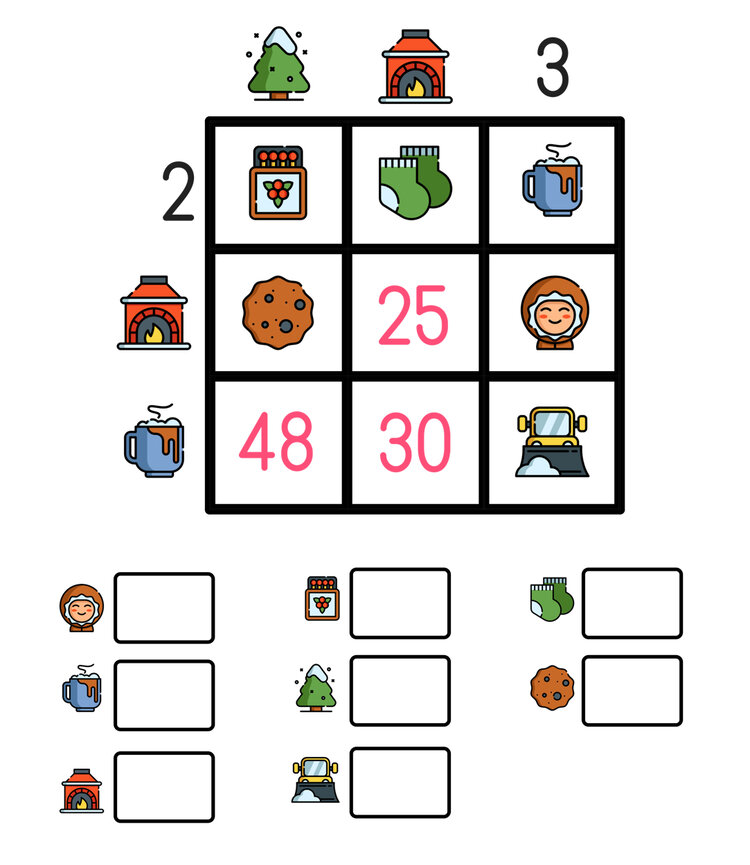
CANDY MATH

CandyMathPuzzle.jpg

Scénarios des situations dangereuses

Contenus d’apprentissage 

C1.2 - identifier des comportements associés aux blessures et au décès chez les adolescents et identifier les précautions possibles.
C2.2 - analyser des situations qui présentent des dangers pour sa sécurité personnelle et identifier des moyens de réduire les
risques qui y sont associés.

Critères de succès pour les scénarios: 

Le discours était clair avec le volume et l’inflexion appropriés. 

Le rôle a été joué de façon convaincante et cohérente.  

Le jeu de rôle était bien préparé et organisé. 


Le jeu de rôles a capté et maintenu l’intérêt de l’auditoire.


Experimental Probability & Odds

Use the table below to compute the experimental probability of the arrow in the spinner landing on yellow.


trial
1
2
3
4
5
6
Total
number of times arrow landed on yellow


total number of spins


Experimental probability


1. How many favorable outcomes were there in the experiment?

2. How many total outcomes were there in the experiment?

3. What is the experimental probability of the arrow landing on yellow?


ODDS 

Review questions

1. For rolling a number cube, what are the odds in favor of rolling a 2?

2. For rolling a number cube, what are the odds against rolling a 2?

3. For rolling a number cube, what are the odds in favor of rolling a number greater than 3?

4. For rolling a number cube, what are the odds in favor rolling a number less than 5?

5. For rolling a number cube, what are the odds against rolling a number less than 5?

6. For rolling a number cube, what are the odds in favor of rolling an even number?

7. For rolling a number cube, what are the odds against rolling an even number?

For a spinner numbered 1 –10, answer the following questions.

8. For spinning the spinner, what are the odds in favor of the arrow landing on 10?

9. For spinning the spinner, what are the odds in favor of the arrow landing on a 2 or 3?

10. For spinning the spinner, what are the odds in favor of the arrow landing on 7, 8 or 9?

11. For spinning the spinner, what are the odds in favor of NOT landing on an even number?

12. For spinning the spinner, what are the odds of the arrow NOT landing on 10?

13. For spinning the spinner, what are the odds in favor of the arrow landing on a number greater than 2?

14. For spinning the spinner, what are the odds in favor of the arrow NOT landing on a number greater than 2?

15. For spinning the spinner, what are the odds of the arrow not landing on a number greater than 3?

Wednesday, February 5, 2020

Probability problems

Keisha’s basketball team must decide on a new uniform. The team has a choice of black shorts or gold shorts and a black, white, or gold shirt.
Use a tree diagram to show the team’s uniform choices.
a) What is the probability the uniform will have black shorts?
b) What is the probability the shirt will not be gold?
c) What is the probability the uniform will have the same-coloured shorts and shirt?
d) What is the probability the uniform will have different-coloured shorts and shirt?


In pairs, on a whiteboard, create the tree diagram for the following problem (use a second whiteboard to show answer to probability questions)

Brit goes out for lunch to the local submarine sandwich shop. He can choose white or whole wheat bread, and a filling of turkey, ham, veggies, roast beef, or salami. Use a tree diagram to show all Brit’s possible sandwich choices.


Use the tree diagram to answer the following questions
a) How many sub choices are there?
b) He may also choose a single topping of tomatoes, cheese, or lettuce. Now, how many
possible sub choices does he have?
c) If each possibility has an equal chance of selection, what is the probability that Brit will
choose a whole wheat turkey sub topped with tomatoes?
d) What is the probability of choosing a veggie sub topped with cheese?
e) What is the probability of choosing a meat sub topped with lettuce on white bread?
f) What is the probability of choosing a meat sub topped with lettuce?

Monday, January 13, 2020

Tirer des conclusions et L'importance spatiale


Sur une feuille de papier, écris ta réponse a la question suivante pour ton niveau scolaire.

Regarde la critère d’évaluation pour ta réponse.


7e année:

Quels facteurs influent sur le climat de ta région? Nomme et explique trois des plus importants.


8e année:

Pourquoi certaines populations s’installent-elles près des volcans malgré les dangers qu’ils représentent?


Critères de d’évaluation:

L’élève démontre sa capacité à expliquer et à interpréter des informations contenues dans un texte, une carte et/ou un tableau en répondant aux questions avec une réponse relativement élaborée. (explication claire et soutenue avec des détails et citations textuelles qui sont pertinents et appropriés)

Discussion and group skills

What is an effective discussion? 
How do you respond to the ideas of others? 
How can students improve your performance in a discussion?
How can a discussion be kept on topic? 
What evidence can be used to assess discussion and group skills? 

Which Group Skills Apply to You?
√ Involving others in the discussion
√ Balancing your viewpoint with those of others
√ Being sensitive to others
√ Building consensus
√ Knowing when to listen, when to speak, and how much to say
√ Taking responsibility for making the group work
√ Displaying confidence or expressing a lack of confidence when genuine doubt exists
√ Contributing vs. Participating
√ Active listening
√ Taking turns

√ Staying on task 

Aggressive: I believe that my ideas are often better than those of others.

Passive: I often believe my ideas are not as good as those of others.


Assertive: I believe my ideas are as good but not necessarily better than those of others. 
In the table below, decide which behaviors are assertive, which are aggressive
and which are passive.


ARE YOU... Pick one of the three options from each category that most closely resembles your discussion style. Are you more aggressive, passive, or assertive? What could you do to be more assertive?


Discussion Skills
1. Summarizing discussion to keep everyone aware of what is being discussed
2. Challenging discussion that is not productive
3. Challenging, in a positive way, the group members’ behaviour that is not facilitating discussion
4. Staying on topic and ensuring that the item being discussed is related to the topic, not starting
a new topic until the current issue is resolved
5. Initiating a new topic when discussion of the current topic has been completed
6. Keeping track of time
7. Trying to get a compromise

8. Connecting ideas together 


Which of the following discussion statements help (🤩) and which ones hurt (😣) a discussion: 


__  But that isn’t a fact. It hasn’t been proven
__ Does everyone agree with Brandon about that?
__ Alexia, you keep coming back to the same point. We already said that was not an issue.
__ Madison, how do you respond to that?
__ We have already spent 10 minutes talking about that.
__ I bet you don’t think that idea is good do you, Ethan?
__ I don’t care what anyone says; two colours are enough.
__ I see, Mackenzie. You agree with Bhavi but think they just want to add two more parts.
__ I think we should finish this topic and move on to question 4.
__ Just a minute, let's finish this discussion before we start on that.
__ Berra, what if we took your idea and changed the word to a word Busra used.
__ I think there are at least causes, Justin.
__ Okay, we have to make a decision, either the red or the white flowers.
__ So we have decided to use four different colours.
__ That is a dumb idea. It isn’t going to work.
__ This is boring. Can we speed up?
__ Sara, would you be willing to compromise on that?
__ We are not getting anywhere on this. Why not just do part of it?
__ What do you mean I have talked too much? I am not finished!
__ What do you mean by too much oxygen, River? 

Thursday, January 9, 2020

Le processus de Révision en groupe

Le processus de Révision en groupe

  1. Les élèves sont placés en groupes de 3 ou 4. Les brouillons et les croquis de chaque groupe sont mis ensemble dans un tas. 
  2. Au début, d'un signal du prof, les brouillons sont passés à un autre groupe. Chaque élève dans le groupe reçoit un brouillon qu'il/elle lit pendant une minute. Après ce temps, même s'ils n'ont pas fini a lire, ils auront un bon sens de l'écriture.
  3. Au signal du minuteur/du prof, les brouillons sont passé dans le groupe, à gauche. Chaque élève a un nouveau brouillon et une minute pour le lire. Le processus continue jusqu'au point ou tout les membres du groupe ont lu chaque brouillon. 
  4. Après que tous les brouillons sont lus, chaque groupe a la tâche de discuter et déterminer les forces et faiblesses de l'écriture de CHAQUE BROUILLON selon les critères de succès. Chaque groupe nomme une secrétaire rapporteuse qui enregistre les remarques du groupe sur la page.  Elle indique les membres du groupe aussi.
  5. Les brouillons sont empilés et passés au prochain groupe.
  6. Refaire toutes les étapes, puis rendre les brouillons aux propriétaires. 
  7. Les élèves regardent les conseils des rédacteurs, puis décident quelles corrections ils vont faire.
On ne corrige pas la grammaire! Si vous voyez les fautes de grammaire, orthographe et ponctuation, indique que l'auteur doit faire les révisions mais c'est à lui de trouver ces erreurs. Utilise Bon Patron ou Scribens.fr pour vérifier les conventions.